The Other Hand: Small Classroom Tweaks That Let Left-Handed Writers Get On With It
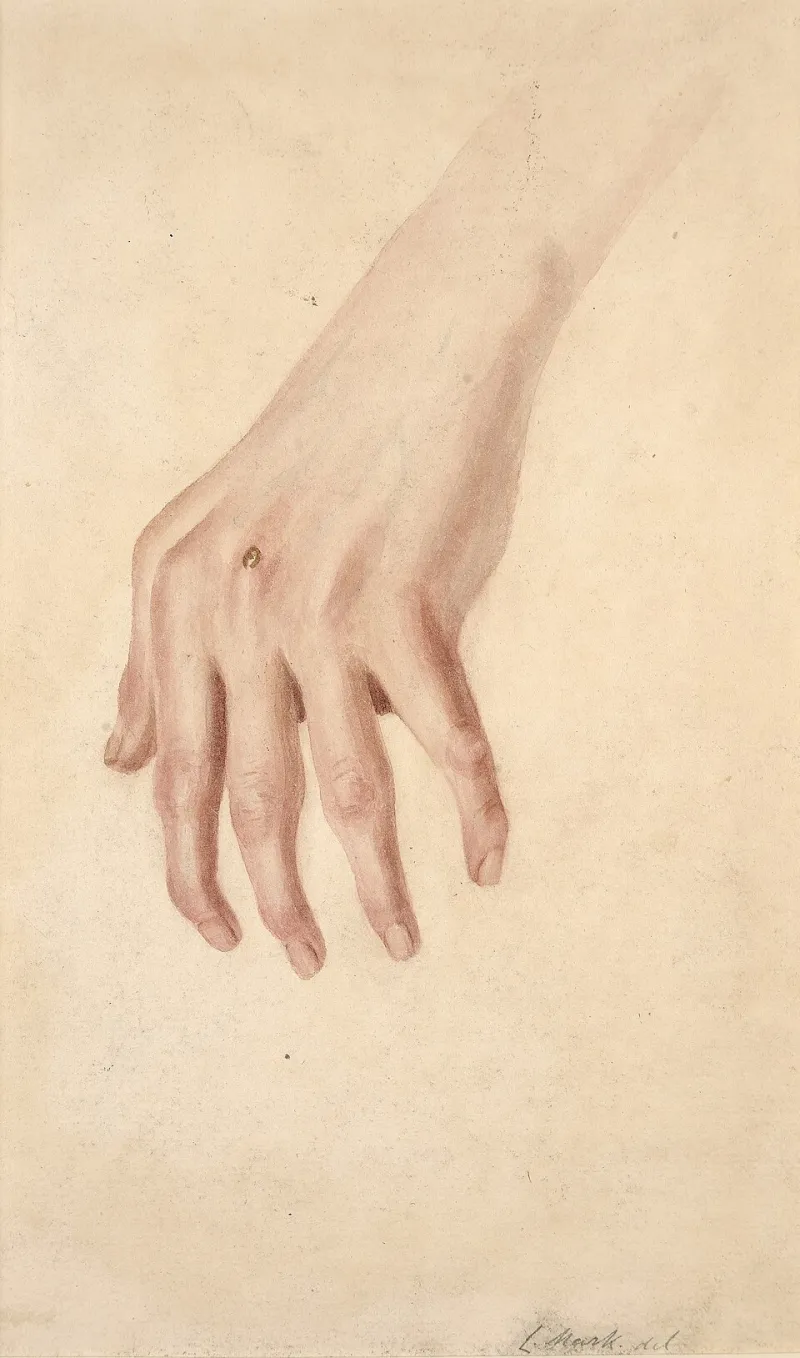
Photo: Mark, Leonard Portal, CC BY 4.0, via Wikimedia Commons
Ask a left-handed adult about primary school and you'll usually get a story. The smudged page. The scissors that chewed rather than cut. The teacher who gently suggested they might "try the other hand and see how it feels." None of it was malicious — it was just a room full of equipment and habits built for the other 90%.
The good news is that almost none of the fixes cost money or eat planning time. They're small physical adjustments: where a child sits, how the page is angled, which pencil they hold, what the scissors look like. Get those right and most left-handers stop fighting their own handwriting.
Start with the desk, not the letters
Before you look at a single letter formation, look at the child's position in the room.
- Seat left-handers on the left end of a shared table. This is the single cheapest win available. Two left-handers side by side, or a left-hander to the right of a right-hander, means a term of clashing elbows and bumped pencils. Put them at the outer left edge and the problem evaporates.
- Give them a bit of elbow room. Left-handers need space to the left of the page, not to the right. If the desk is jammed against a wall or a tray, they'll end up writing with a hooked wrist to compensate.
- Watch the light. A left-hander's hand shadows the line they're writing on if the light comes over their shoulder from the right. Nothing dramatic — just check they aren't writing in their own shade.
That's it for furniture. Three minutes with a seating plan.
The paper angle is doing more work than you think
Right-handers pull the pencil across the page. Left-handers push it. That single mechanical difference is why the standard advice — page straight or tilted slightly anticlockwise — doesn't transfer.
For a left-handed writer, rotate the page clockwise, so the top edge leans to the right. This lets the forearm travel downwards rather than across, and it means the hand stays below the line being written, not smeared over it. Some children need quite a pronounced angle, 30 to 45 degrees; others prefer only a slight tilt. Let them find it — hand them the page and say "turn it until your arm feels comfortable."
A cheap clipboard or a slanted writing slope can help too, particularly for children who hook their wrist over the top of the line. If you've got none, a ring binder under the paper does a passable impression.
Grip, pressure and the smudge problem
You'll meet a lot of left-handers with a hooked grip, wrist curled over the top of the writing. It looks awkward and it's often corrected too hard. In practice it's a workaround — the child is trying to see what they're writing. Fix the paper angle and the hook frequently softens on its own.
Where a child is gripping very tightly, the culprit is often the pencil rather than the hand:
- Softer lead. A B or 2B pencil needs less pressure than a hard HB, which cuts both hand strain and the depth of the groove in the page.
- Shorter pencils. A long pencil pushes the grip further from the point and makes control harder. Break them in half or use stubby ones.
- Grips are optional. A triangular or moulded grip suits some children and infuriates others. Offer, don't impose.
Smudging is the complaint you'll hear most at home. Pencil is far more forgiving than pen, so keep handwriting practice in pencil for longer than you might with a right-hander. When pen is required, a quick-drying rollerball beats a fountain pen by a country mile, and a sheet of paper under the writing hand — a guard sheet — keeps the page clean.
The kit that quietly excludes them
This is where a lot of left-handed frustration actually lives, and it's rarely about handwriting at all.
Scissors. Genuine left-handed scissors have the blades reversed, so the top blade sits on the left. This matters because the top blade is the one you can see — it's what lets you follow the cutting line. "Ambidextrous" scissors usually just have symmetrical handles with the blades unchanged, which solves nothing. Buy a couple of proper pairs and keep them in a known place rather than buried in the general pot.
Rulers. Left-handed rulers have the numbers running from the right end. A child measuring from the left edge with a standard ruler has to read upside down. One or two in the maths tray is plenty.
Notebooks and folders. Wire-bound books with the spiral on the left are miserable for a left-hander — the wire sits exactly where the wrist wants to be. Top-bound or right-bound books solve it. Where you can't change the book, let them use the reverse side of the page, or slip a piece of card under the wrist.
Whiteboards. Same story: the pen hand rests on freshly written, still-wet text. Mini whiteboards and a bit of patience go a long way.
Modelling and demonstration
When you demonstrate letter formation on the board, a left-hander is watching a mirror image. That's not fatal — children cope — but it helps to be deliberate about it. Stand to the side rather than directly in front of the board, and where you have a confident left-handed writer in the class, ask them to model occasionally. Peer demonstration lands better than adult demonstration at this age anyway.
If you're doing fine-motor intervention groups, check the composition. A left-hander in a group of right-handers, copying right-handed movement patterns, is being asked to translate in real time.
The parent handover
Most of the friction happens at the join between school and home. A short note or a two-minute conversation at the gate is worth more than a printed leaflet.
Cover four things:
- What you've changed in class — paper angle, seating, pencil type.
- What to try at the kitchen table — the same page rotation, a B pencil, an old ring binder as a slope.
- What not to worry about — the hooked grip if it's easing, letter reversal (common in all young writers and not a left-handed problem), speed.
- Time limits. Five focused minutes beats twenty minutes of misery. Left-handed writing is more physically tiring, so short and frequent is the right shape.
A five-minute termly check
The whole thing comes down to a quick audit at the start of each term: who in the class is left-handed, are they at the left end of a table, is there a left-handed scissors within reach, and does the seating still work after the inevitable reshuffle? Everything else is a conversation, not a purchase order.
None of this is a handwriting programme. It's just making sure the room isn't quietly working against a tenth of the class.